Shared journeys / Field guide 05
Photogenic Places and Travel Moments for Couples
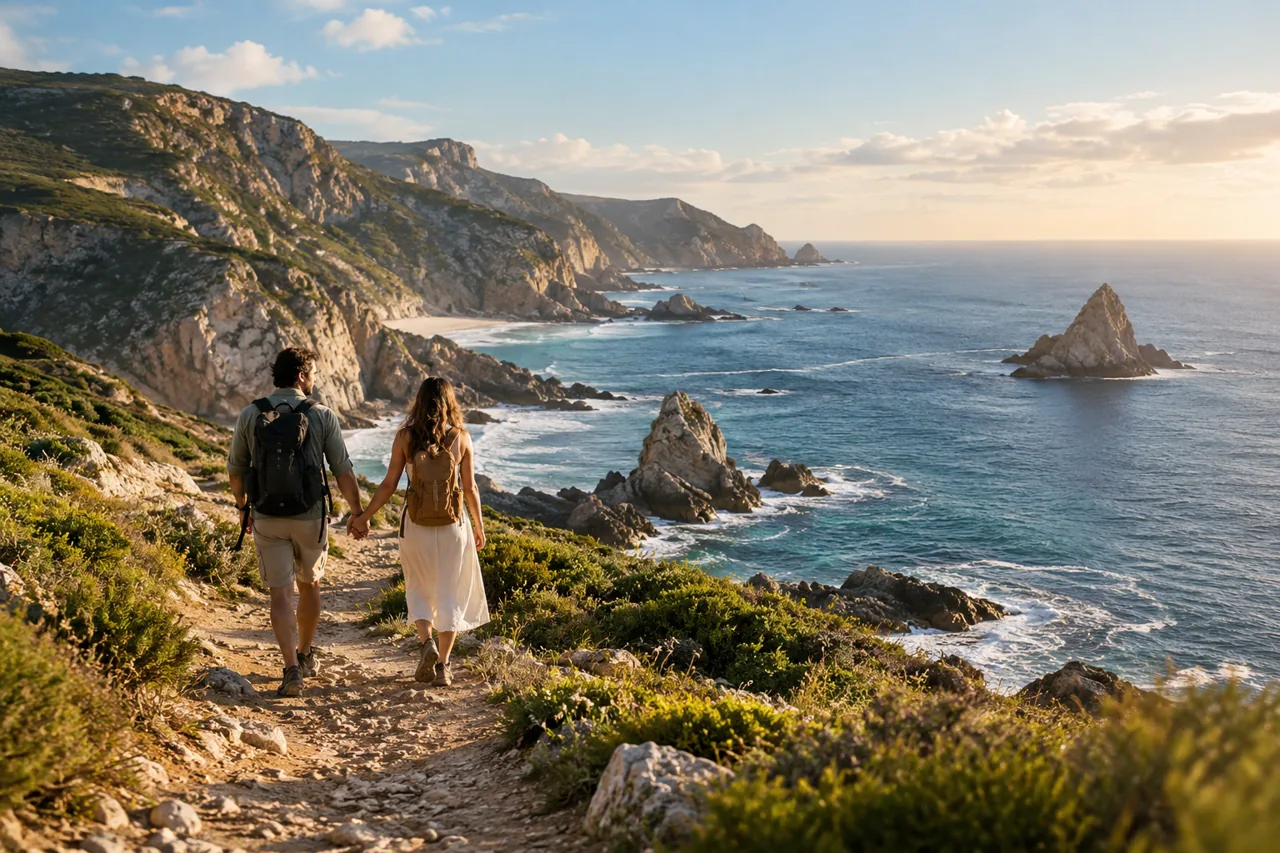
Good couples travel photography ideas begin with a shared activity, a meaningful setting, and a short session that both people enjoy. Photograph walking, looking at a view, or taking a break before attempting elaborate poses. A small sequence of honest moments often tells the journey better than one heavily directed portrait.
Choose the setting for its connection to your trip, not only its appearance. A quiet street near your accommodation, a permitted waterfront path, or the table where you celebrated can matter more than a famous viewpoint. This guide treats the photographs as part of a shared experience rather than the purpose of the whole holiday.
Choose a place with room to be yourselves
Look for a safe, permitted area where you can pause without blocking others. A broad path, open square, or simple wall can give you a clean background. Check how much walking is involved and whether one person will be carrying equipment while the other waits.
A scenic location is only useful if both people feel comfortable there. Wind, slippery footing, heat, and a crowded edge can make a portrait tense. Move to an easier setting when necessary. Do not ask someone to climb, lean beyond a barrier, or enter water for a photograph.
Plan one short session
Agree on a beginning and an end. A brief session after a walk may be more relaxed than stopping repeatedly all day. Discuss the kinds of pictures you want: playful, quiet, environmental, or close. Give either person room to say they would rather skip a frame.
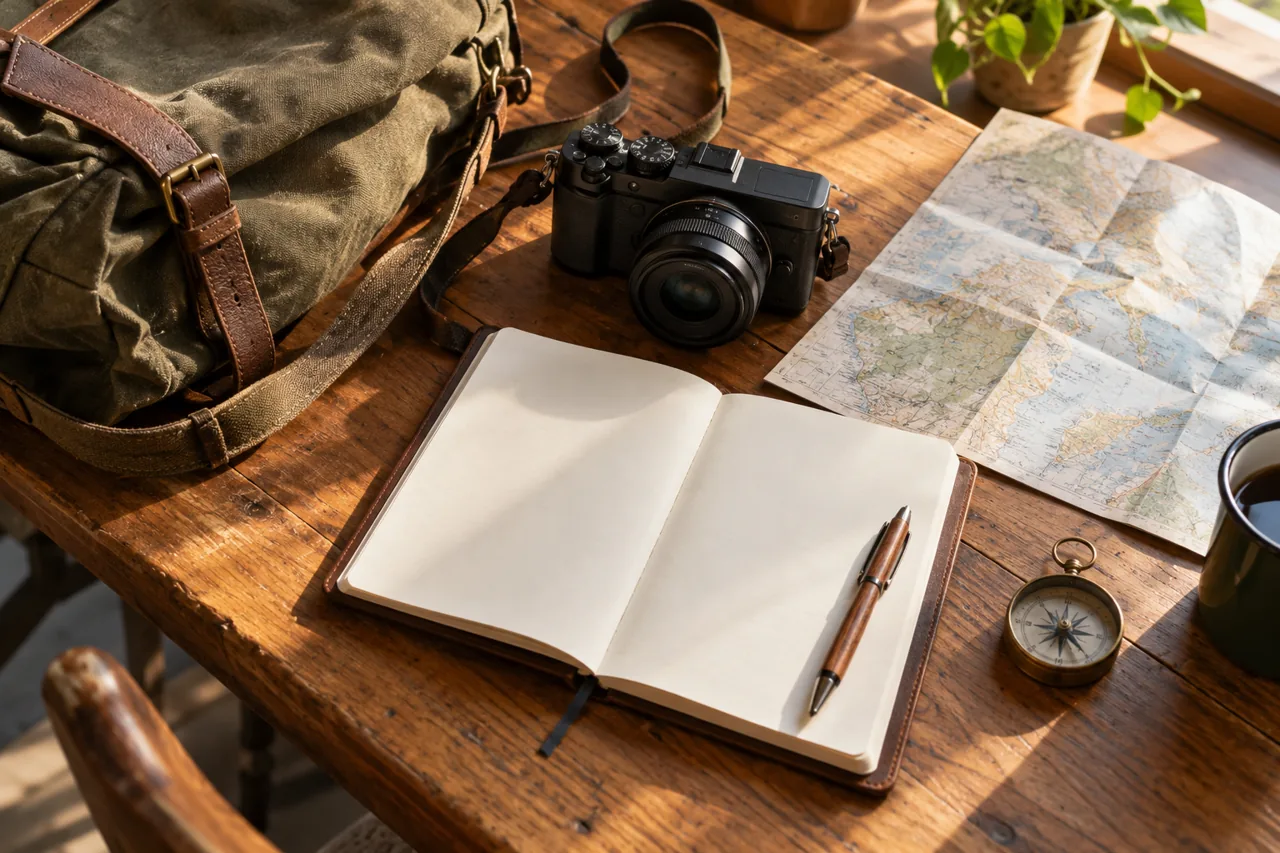
Make a small shot list: one wide picture of the place, one medium image together, and one detail linked to the day. A pair of cups, a ticket, or hands holding a map can add context if you photograph them honestly. The list should guide the session, not turn affection into a performance.
Use movement to reduce stiffness
Walking slowly along a safe path gives hands and feet something natural to do. Have the photographer stay out of traffic and let the couple move within a defined space. Ask for an ordinary action, such as looking towards the view, instead of a complicated series of body positions.
Movement needs a suitable shutter speed. Review a test frame for blurred faces or hands before continuing. If the light is too low, stop walking and use a simple still pose. A sharply photographed relaxed moment is more useful than many blurred attempts at a spontaneous effect.
Make the landscape part of the story
In an environmental portrait, the couple can be small in the frame while the setting establishes the trip. Place them where their outlines remain distinct from background shapes. Do not position a head directly against a bright sign or a dark branch that makes it difficult to read.
Leave breathing room around the figures and look at the horizon. A line passing through a face can distract from the relationship. Adjust the camera height or position where safe. Our destination guide helps compare setting types without treating one place as universally more romantic.
Find flattering, comfortable light
Open shade can provide even light on faces, especially during bright weather. Ask the couple to turn gently towards the brighter part of the sky. Under mixed light, one person may fall into shadow while the other is brightly lit; move them closer to the same lighting conditions.
Low sun can create warm atmosphere, but looking directly into it is uncomfortable. Back light may work when faces remain readable and the background is simple. See our golden hour guide for ways to balance a bright background with the subject.
Photograph yourselves without rushing
Use a permitted, stable camera position and test the framing before starting the timer. A small tripod can help where allowed, but never occupy an escape route or busy walkway. Do not leave valuables far away or place equipment where it could fall onto someone.
A phone remote or timer can make the process easier. Mark a safe standing area using an existing feature, not paint or objects left behind. Check focus and review the result together. If the camera repeatedly misses, simplify the arrangement instead of extending a frustrating session.
Include the ordinary moments
An album becomes more personal when it contains the pauses between highlights. Photograph the arrival, a shared meal with consent and venue permission, or the first look at a room's view. Put the camera away for conversations that should remain private.
Do not manufacture every detail afterwards to imply it happened naturally. A posed photograph is perfectly reasonable; describe it honestly if the context matters. The value of a travel record comes partly from recognizing the day as you remember it.
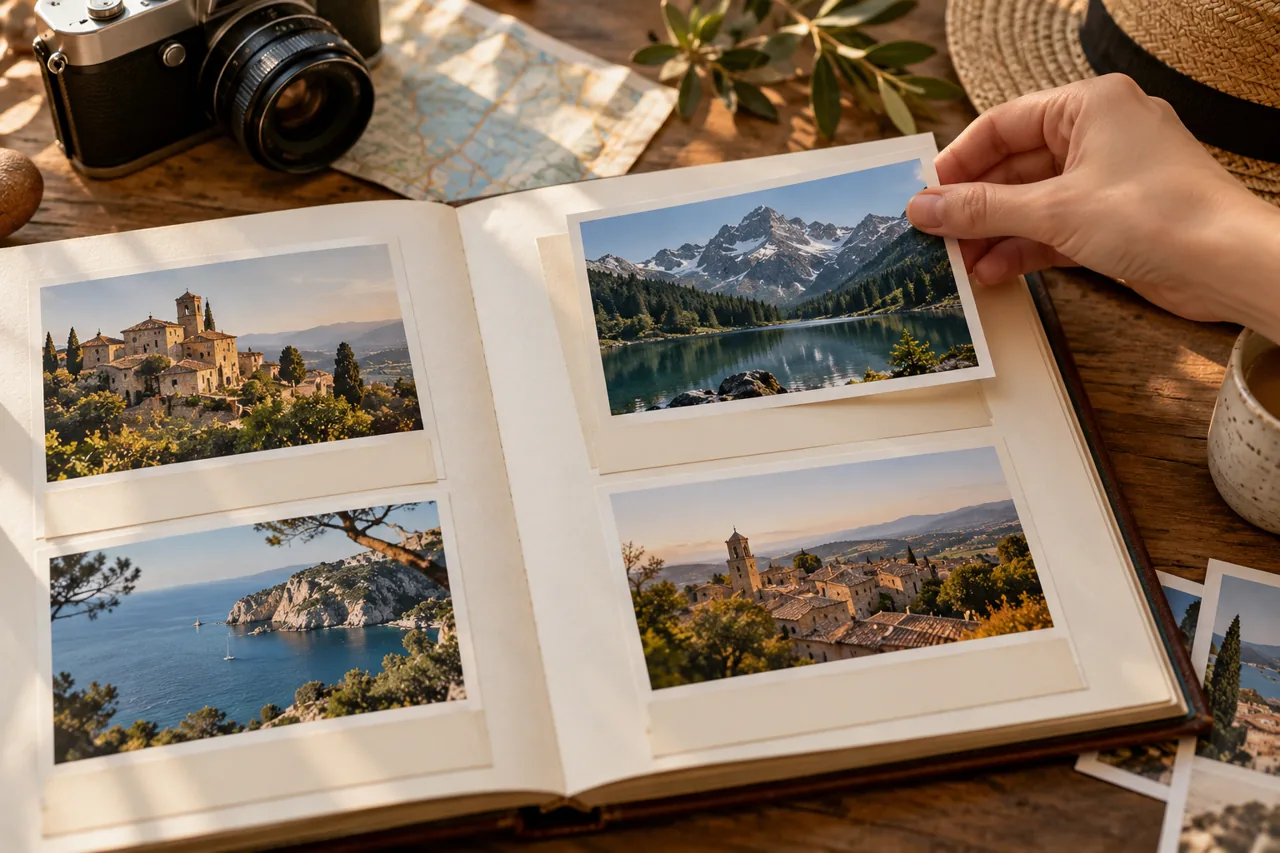
Build an anniversary series
Choose a subject that connects the milestone to the place. You might repeat a simple portrait from an earlier trip, record a favorite shared routine, or select one view to photograph each year. These are creative suggestions, not promises that a particular destination has suitable access.
Pair the selected photograph with a specific note about the experience. If you need a starting point for an anniversary album addressed to your husband, HeartfeltTexts' anniversary message collection offers wording ideas. Adapt them to your own memory rather than letting a general phrase replace the story of the trip.
Edit the collection as a sequence
Start with a place-setting image, move into a shared activity, and end with a quieter moment. Remove near-duplicates so each photograph adds something. Keep color and brightness broadly consistent, while allowing different times of day to retain their character.
Avoid reshaping bodies or changing expressions in a way the person dislikes. Review photographs together before sharing. A good private memory does not need to become a public post, and consent to a session does not mean agreement to every publication.
Keep images and context together
Save the date, place, and a short note alongside the final selection. Keep original files and edited copies in clearly named folders. Maintain an independent backup before clearing a phone or card. Export a suitable size for sharing while retaining a higher-quality copy for later printing.
Print a small selection or make an album rather than leaving everything in a crowded camera roll. Add names and descriptions carefully, avoiding precise location details when privacy matters. If another person took the photographs, agree on how they may be used and credited.
A relaxed session checklist
- Choose a meaningful place and verify permission.
- Agree on the session length and preferred style.
- Make one wide image, one together, and one detail.
- Check the light, focus, and subject movement.
- Keep equipment and people away from hazards.
- Review the images and sharing choices together.
Couples photography questions
What if we feel awkward posing?
Begin with an activity such as walking, sitting, or looking at the view. Keep instructions simple and stop when it feels forced. A short relaxed session is enough.
Should our outfits match?
They do not need to. Comfortable clothing that suits the setting matters more. If planning a portrait, compare colors so one outfit does not unintentionally dominate the frame.
Can a phone produce a good anniversary album?
Yes. Pay attention to the lens, light, background, and file storage. Review the print requirements for the album size you choose rather than assuming every crop will print equally well.
Do we need an iconic destination?
No. A familiar place connected to your relationship can make the images more meaningful. Choose a location both people enjoy and can use comfortably.