Architecture & events / Field guide 06
Stadium and Event Photography Travel Tips
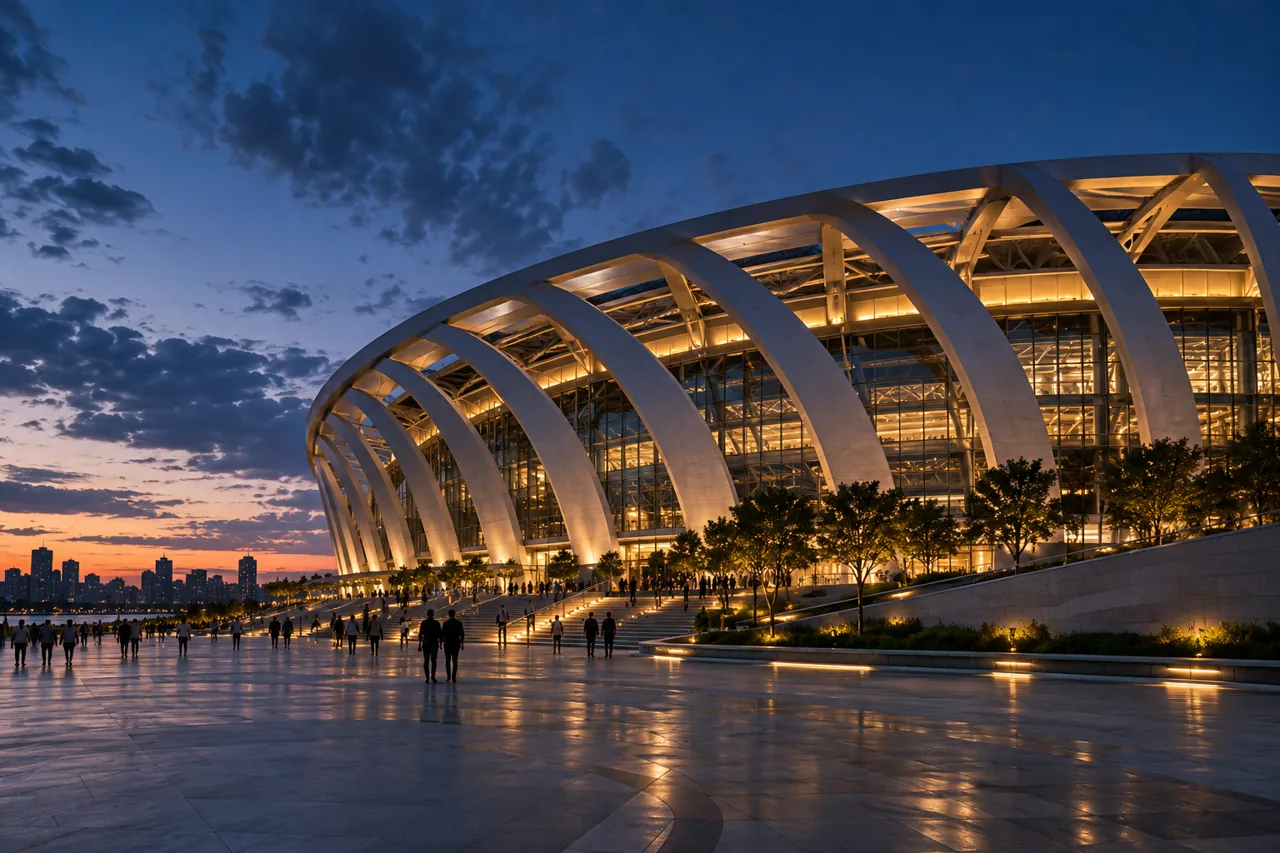
For a stadium photography trip, separate exterior architecture, the public surroundings, and photography inside a ticketed event. Each can have different access and equipment rules. Verify the specific venue and event before packing, then plan transport and a permitted shooting position that keeps entrances and pedestrian routes clear.
This is a general planning guide, not permission to photograph at any stadium. A plaza visible on a map may be privately controlled, and a ticket does not automatically authorize professional equipment or commercial use. The cover image depicts a fictional stadium as illustrative artwork.
Choose the type of visit first
An exterior architecture session can focus on structure, materials, and the relationship between the stadium and its neighborhood. An event-day visit may emphasize arrivals, atmosphere, and your own experience as a spectator. A tour has its own route and conditions. Choose one primary purpose before organizing the trip.
Write down the image you want and the access it requires. A view of structural ribs from a permitted nearby path is a different request from a photograph inside the bowl. Do not assume that a closed-event day gives you free access to the grounds.
Read the event information, not only the venue page
Check the official venue website and the organizer's event-specific instructions. Look for camera restrictions, lens limits if listed, bag rules, prohibited equipment, entry requirements, and photography-use conditions. Save the relevant information and recheck it close to departure.
For example, SoFi Stadium's official policies direct visitors to event-specific “Know Before You Go” information and describe screening and management discretion. That is an example of the information to consult, not a universal stadium rule. Confirm the conditions for your own event and equipment directly.
Pack only what the rules support
A camera being small does not mean its bag is permitted. Tripods, monopods, detachable lenses, and recording equipment may be treated differently across events. If an official policy is unclear about your model or intended use, ask the venue before bringing it.
Plan a simpler kit if needed. A phone may be a practical option when it is allowed, but it still does not remove rules about recording, obstruction, or publication. Do not rely on a storage facility or the ability to return to a car unless you have verified those arrangements.
Plan parking and the walking route together
Arrival logistics affect the time and energy available to photograph. Check the official parking and transport information, the correct pedestrian approach, and any current event notices. A nearby-looking car park can still leave you on the wrong side of a restricted area or a busy road.
If you are researching that particular venue, VenueGuideHQ's SoFi Stadium parking guide can provide an independent starting point for arrival planning. Confirm time-sensitive prices, availability, and procedures with the official venue or operator. Parking research is not photography authorization.
Allow a buffer for security, queues, and navigating the grounds. If your trip uses public transport, check the last usable departure and the route to it after the event. Keep a fallback that does not depend on racing through a crowd with equipment.
Study exterior light and structure
Modern stadiums often present repeated supports, curved façades, transparent surfaces, and large changes in scale. Look for a simple relationship between one structural element and its background. A medium view can explain the design more clearly than a wide frame containing every entrance and parked vehicle.
Compare side light and a softer sky when you scout. Strong sunlight can emphasize ribs and recesses; cloud can make reflective surfaces easier to read. A night appearance depends on actual lighting arrangements, so do not assume architectural lights will be on during a quiet visit.
Keep perspective intentional
From close to a large building, tilting upwards can create strong converging lines. That may suit a dramatic structural photograph. For a more descriptive view, step back where you can do so safely and keep the camera level. Do not cross a road or enter a restricted zone just to fit the roof into the frame.
Use a longer focal length to isolate connections and repeated shapes when the whole building is difficult to include. The historic city photography guide explains perspective decisions that also apply to contemporary architecture.
Photograph the event atmosphere responsibly
Stay out of entrances, emergency routes, and security work areas. Do not set down a bag in a crowd or stop abruptly in moving pedestrian traffic. Make photographs from a position where people can continue their journey without walking around you.
For intentional portraits, ask permission and respect refusals. Avoid singling out children or people in distress. If photographing a broad scene, think about how recognizable individuals may be affected by publication. Local rules and event terms still matter even when the subject is in a publicly visible space.
Work with the seat you have
Inside an event, do not move into another ticketed area or stand in a way that blocks views for a photograph. Frame from the position you are permitted to occupy. A wide view of the setting, a personal reaction with consent, and a detail of your own experience can tell the story without restricted access.
Bright field or stage lighting and darker seating can create difficult exposure differences. Review important highlights and choose a shutter speed for the subject's motion. A phone's night mode may blur moving people; check a test image rather than judging only the preview.
Distinguish a visitor from a commissioned photographer
A spectator ticket is not a media credential. Professional assignments can require organizer approval, insurance, accreditation, or other arrangements specified by the venue. Do not advertise access you have not been granted or imply that visitor photography conditions cover commercial work.
If you want to publish a series beyond a personal album, review applicable event terms and seek clarification where needed. This guide does not give a jurisdiction-specific legal conclusion. The practical step is to resolve the intended use before the trip, while you can still change the plan.
Make a return plan
Choose where to pack the camera without obstructing people, and keep valuables secure. After the event, the light, crowd flow, and transport situation can differ from arrival. Resist making an extra exterior session depend on lingering in an area that staff are clearing.
Review files and back them up when you reach a suitable place. Record the event, date, and verified venue name. If an image is illustrative, staged, or materially altered, label it accordingly when context could otherwise mislead a viewer.
Before-you-go checklist
- Identify exterior, tour, or event photography as the main purpose.
- Read official venue and event-specific camera and bag rules.
- Resolve unclear equipment or publication questions in advance.
- Verify parking, transit, pedestrian access, and the return route.
- Choose permitted positions and keep entrances clear.
- Pack a smaller alternative kit if the rules require it.
Stadium photography questions
Can I bring a DSLR to any stadium?
No general answer applies. Check the venue and event rules for cameras, lenses, and bags. Seek clarification if your equipment is not addressed.
Can I photograph outside without a ticket?
It depends on the exact location and access conditions. Visible grounds are not necessarily public. Use permitted areas and follow signs and staff directions.
Is parking information enough to plan the visit?
It covers only part of the trip. You also need pedestrian access, photography rules, entry arrangements, and a return plan. Use our trip planning guide to organize those checks.
Will a tripod improve my pictures?
It can support slower exposures, but only use it where allowed and without obstructing others. It does not freeze moving subjects or provide access to restricted positions.